Pyrolysis-GC/MS for Paint and Coating Analysis: Principles, Applications and Benefits
How Pyrolysis-GC/MS Supports Paint and Coating Analysis
Introduction to Paint and Coating Analysis
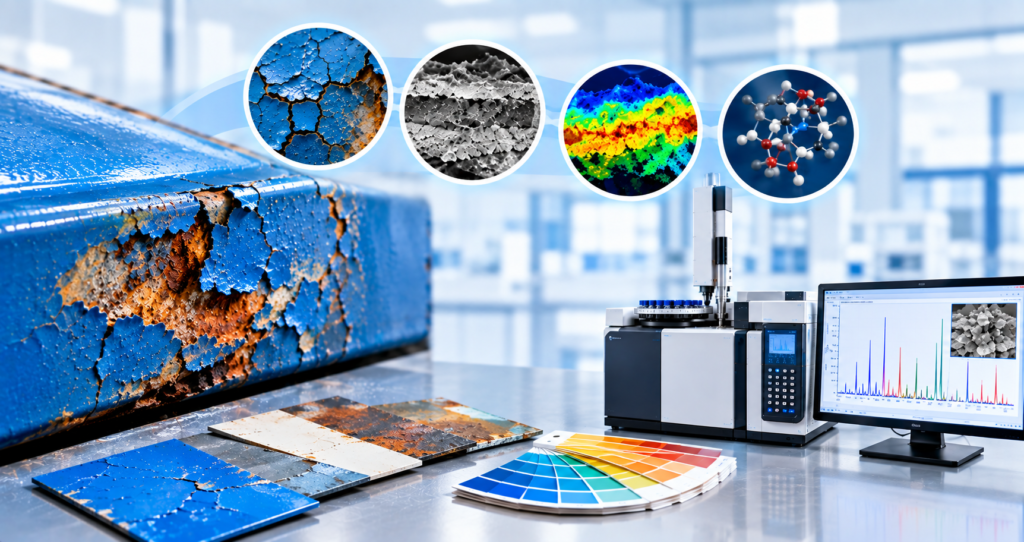
Paints and coatings are complex materials designed to provide protection, appearance, adhesion, durability, and resistance to environmental conditions. Their performance depends on the interaction of multiple components, including polymer binders, resins, additives, pigments, and other organic materials.
Understanding the chemical composition of a paint or coating can therefore be important for quality control, raw material evaluation, product development, comparative analysis, and failure investigation.
Traditional analytical techniques can provide valuable information about individual properties or components, but complex coating formulations may require a technique capable of characterizing their organic constituents.
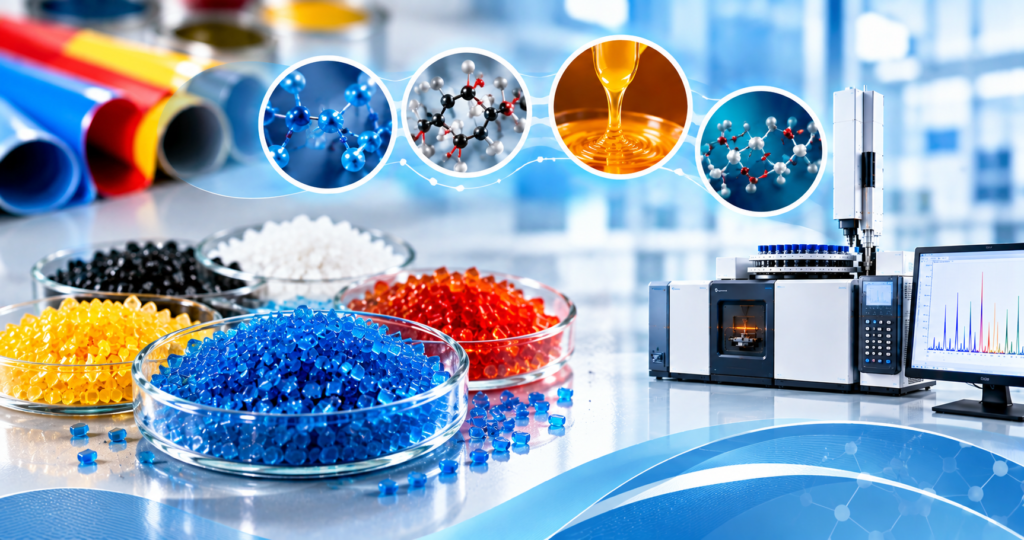
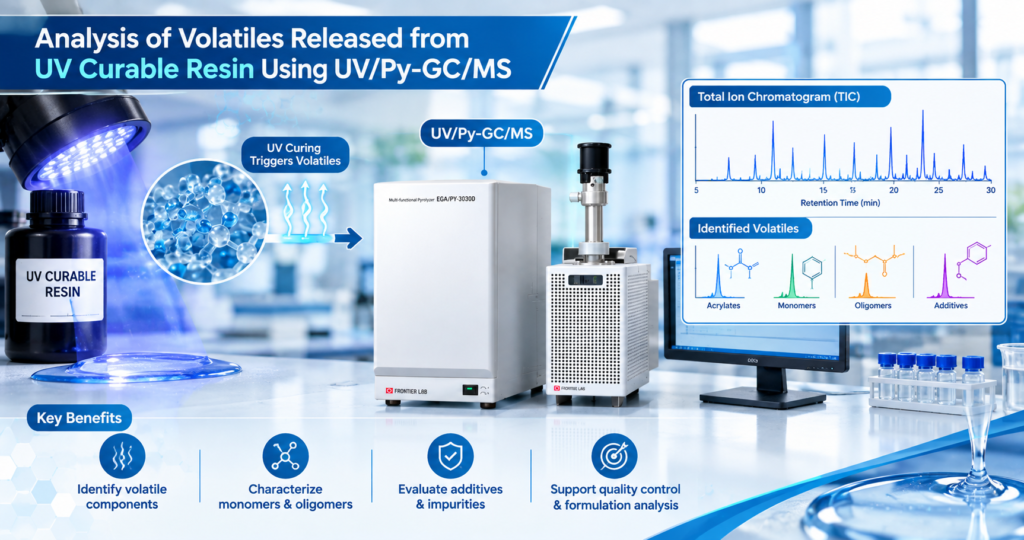
Pyrolysis-Gas Chromatography/Mass Spectrometry (Py-GC/MS) provides a powerful approach for chemical characterization by thermally decomposing polymeric and other high-molecular-weight materials into smaller, characteristic compounds. These pyrolysis products are then separated by GC and identified using MS.
The resulting chemical profile can help researchers identify polymer binders and resins and characterize complex paint and coating formulations.
Why Chemical Characterization Matters in Paints and Coatings
Paint and coating formulations can contain several chemically different components. The polymer binder or resin often plays a major role in determining properties such as adhesion, flexibility, hardness, chemical resistance, and durability.
However, identifying the binder in a finished coating can be challenging when it is present together with pigments, additives, fillers, and other formulation components.
Chemical characterization can help answer questions such as:
- What type of polymer or resin is present?
- Are two coating materials chemically similar?
- Has the formulation changed between production batches?
- Can an unknown coating be compared with a reference material?
- What organic components may be contributing to a coating failure?
- Can raw materials be differentiated based on their chemical fingerprints?
Pyrolysis-GC/MS for paint and coating analysis addresses these challenges by converting complex polymeric materials into characteristic volatile products that can be separated and identified.
What Is Analytical Pyrolysis?
Analytical pyrolysis is a technique in which a sample is rapidly heated under controlled conditions, causing larger molecules such as polymers and resins to thermally decompose into smaller molecules.
These decomposition products, known as pyrolyzates, can contain chemical information related to the original material.
For paint and coating samples, the process can be represented as:
Paint or coating sample → controlled pyrolysis → characteristic pyrolysis products → GC separation → MS identification → chemical fingerprint
Because different polymers can produce different combinations of pyrolysis products, the resulting chromatographic pattern can be used for material identification and characterization.
Analytical pyrolysis is particularly useful for materials that are difficult to analyze directly by conventional GC because their molecular weights or physical properties prevent them from being readily vaporized.
How Pyrolysis-GC/MS Works
A typical Py-GC/MS workflow involves several analytical stages.
1. Sample Introduction
A small quantity of paint, coating, film, residue, or related material is introduced into the pyrolysis system.
Sample preparation can vary depending on the material and analytical objective. The sample may be analyzed directly or subjected to appropriate preparation before pyrolysis.
2. Thermal Decomposition
The sample is rapidly heated in the pyrolysis furnace under controlled conditions.
Polymeric binders and other high-molecular-weight organic components break down into smaller compounds.
3. Transfer of Pyrolyzates
The resulting pyrolysis products are transferred from the pyrolysis system into the GC.
Controlling this transfer is important because the composition of pyrolyzates can be affected by secondary reactions or thermal processes.
4. Gas Chromatographic Separation
The GC separates the pyrolysis products according to their chemical and physical properties.
This produces a chromatographic pattern containing multiple peaks associated with different compounds.
5. Mass Spectrometric Identification
The separated compounds enter the mass spectrometer, where their mass spectra are recorded.
The spectra can then be compared with reference data, libraries, standards, or known material profiles to support compound identification.
6. Chemical Fingerprint Interpretation
The combination of pyrolysis products and their relative chromatographic profiles provides a chemical fingerprint of the original material.
This fingerprint can be used for paint composition analysis and coating material characterization.
How Py-GC/MS Is Used for Paint and Coating Analysis
Py-GC/MS can provide information about organic components that may be difficult to characterize directly.
A major application is the identification and characterization of polymer binders and resins.
For example, different resin systems can generate characteristic pyrolysis products. By examining the overall chromatographic profile rather than relying on a single compound, analysts can obtain a more comprehensive picture of the coating’s organic composition.
Py-GC/MS can therefore support:
- Polymer and resin identification
- Comparison of coating formulations
- Characterization of organic binders
- Identification of unknown coating materials
- Investigation of formulation differences
- Analysis of complex coating systems
- Comparative evaluation of reference and suspect materials
Characterization of Polymer Binders and Resins
Polymer binders are among the most important organic components in many coating formulations.
Depending on the formulation, coatings may contain different resin or polymer systems designed to provide specific performance characteristics.
Polymer analysis using Py-GC/MS works by examining the characteristic products generated during pyrolysis.
Rather than attempting to vaporize the original polymer directly, the polymer is converted into smaller molecules that can be analyzed by GC/MS.
This approach can help characterize resin systems based on their pyrolysis profiles.
Resin Identification in Coatings
The identification of a resin can be especially valuable when analyzing unknown, aged, or complex coating materials.
The presence of characteristic pyrolysis products, together with the overall chromatographic pattern, can help distinguish between different classes of polymeric materials.
The interpretation should consider the complete chemical profile because coatings may contain multiple polymers, additives, and other organic components that can contribute to the observed chromatogram.
Analysis of Complex and Multicomponent Coatings
Finished coatings are rarely composed of a single chemical substance.
A typical coating can contain a combination of:
- Polymer binders or resins
- Plasticizers
- Solvents or residual organic compounds
- Additives
- Modifiers
- Pigments
- Fillers
- Other formulation components
This complexity can make direct analysis difficult.
Py-GC/MS can help by generating a characteristic profile of the thermally decomposable organic fraction. Multiple pyrolysis products can then be evaluated together to understand the composition of the coating.
For complex samples, interpretation of the entire chromatographic pattern is particularly important because individual peaks may originate from different formulation components.
Identifying Organic Components in Coating Materials
One of the strengths of paint and coating chemical analysis using Py-GC/MS is its ability to provide information about organic components in a finished material.
The technique can be used to investigate:
Polymer Binders
The primary polymeric component responsible for many coating properties can often be characterized through its pyrolysis products.
Resins
Resin systems can be differentiated by their characteristic pyrolysis profiles.
Organic Additives
Certain additives and modifiers may produce detectable compounds that contribute to the overall chemical fingerprint.
Mixed Organic Formulations
When multiple organic materials are present, the combined pyrolysis profile can provide information about the formulation.
The interpretation of these components can be strengthened through the use of reference materials, standards, analytical libraries, and complementary techniques where appropriate.
Applications of Py-GC/MS in the Paint Industry
Quality Control
Manufacturers can use Py-GC/MS as part of quality-control investigations to compare coating materials and monitor chemical consistency.
Comparing chromatographic fingerprints between batches can help identify significant compositional differences.
Raw Material Evaluation
Raw materials such as polymer binders and resins can be characterized before they are incorporated into a final coating formulation.
This can support supplier evaluation, incoming-material inspection, and formulation control.
Product Development
During coating development, chemical characterization can help researchers investigate how changes in polymer or resin composition affect the resulting material.
Py-GC/MS can provide supporting chemical information alongside performance testing and other analytical measurements.
Comparative Analysis
Py-GC/MS can be used to compare:
- Reference and unknown coatings
- Different commercial products
- Different production batches
- Original and modified formulations
- Materials before and after processing or aging
The resulting chromatographic fingerprints can provide a chemical basis for comparison.
Failure Investigation
When a coating does not perform as expected, chemical characterization may help investigate possible formulation differences or changes in the organic binder system.
Py-GC/MS can be incorporated into broader failure-analysis workflows to examine coating residues, degraded materials, or reference samples.
Advantages of Py-GC/MS for Coating Characterization
Pyrolysis-GC/MS for paint and coating analysis offers several advantages for investigating complex polymer-containing materials:
- Characterization of polymeric materials that are not readily analyzed by conventional GC
- Identification of characteristic pyrolysis products
- Chemical fingerprinting of coating materials
- Analysis of small sample quantities
- Characterization of polymer binders and resins
- Comparative analysis of unknown and reference materials
- Investigation of complex organic formulations
- Support for quality control and failure analysis
- Compatibility with complementary analytical techniques
Another important advantage is that Py-GC/MS focuses on the chemical composition of the material rather than only its physical properties.
Py-GC/MS Compared with Conventional Analytical Techniques
No single analytical technique provides every type of information required for paint and coating characterization. Different techniques answer different analytical questions.
FTIR
FTIR can provide information about functional groups and chemical bonding and is widely used for material identification.
However, complex formulations can produce overlapping spectra, making detailed differentiation challenging in some cases.
DSC and TGA
Thermal analysis techniques such as DSC and TGA can provide information about thermal transitions, decomposition, and thermal stability.
They are useful for understanding material behavior but generally do not provide the same compound-level chemical identification as GC/MS.
GC/MS
Conventional GC/MS is highly useful for volatile and semi-volatile compounds. However, high-molecular-weight polymers and resins generally cannot be directly introduced into a GC in their original form.
Pyrolysis provides a solution by thermally decomposing these materials into analyzable products.
Py-GC/MS
Py-GC/MS combines thermal decomposition with chromatographic separation and mass-spectral identification.
This makes it particularly useful for polymer analysis using Py-GC/MS, resin characterization, and chemical fingerprinting of complex coating materials.
In many analytical workflows, Py-GC/MS can therefore complement FTIR, thermal analysis, microscopy, and other characterization methods rather than replacing them.
Selecting a Pyrolysis-GC/MS Configuration for Coating Analysis
The appropriate analytical configuration depends on the sample type and the information required.
Important considerations include:
Sample Characteristics
The physical form and composition of the coating can influence sample preparation and pyrolysis conditions.
Pyrolysis Temperature
Different polymers and organic components can produce different pyrolysis products depending on the thermal conditions used.
The pyrolysis temperature should therefore be selected based on the material and analytical objective.
Injection Configuration
Efficient transfer of pyrolysis products into the GC can be important for obtaining reproducible and representative chromatographic profiles.
Detection Mode
MS detection can provide both chromatographic and mass-spectral information, supporting identification of characteristic pyrolysis products.
Reference Materials
The use of known reference coatings, resins, or standards can improve confidence when comparing unknown materials.
Method development should consider the complete analytical workflow, including sample preparation, pyrolysis conditions, transfer, GC separation, MS detection, and data interpretation.
Frontier Laboratories Solutions for Paint & Coating Analysis
Frontier Laboratories provides analytical pyrolysis solutions designed for the characterization of polymeric and complex materials.
For paint and coating applications, Py-GC/MS can be used to investigate polymer binders, resins, additives, and other organic components by analyzing their characteristic pyrolysis products.
The approach can support applications including:
- Paint composition analysis
- Resin identification
- Coating material characterization
- Polymer identification
- Comparative material analysis
- Quality-control investigations
- Product development
- Failure analysis
By integrating controlled pyrolysis with GC/MS analysis, laboratories can obtain detailed chemical fingerprints from materials that may otherwise be difficult to analyze directly by gas chromatography.
Learn more about Frontier Laboratories Py-GC/MS solutions →
Conclusion
Paints and coatings are complex formulations in which polymer binders, resins, additives, pigments, and other components can influence material performance.
Understanding their chemical composition can be important for quality control, product development, raw material evaluation, comparative analysis, and failure investigation.
Pyrolysis-GC/MS for paint and coating analysis provides a practical analytical approach by converting polymeric and other high-molecular-weight organic materials into characteristic pyrolysis products. These products can then be separated by GC and identified using MS to generate a chemical fingerprint of the original material.
The workflow is straightforward:
Paint sample → pyrolysis → characteristic products → GC separation → MS identification → chemical fingerprint
This makes Py-GC/MS particularly useful for polymer binder characterization, resin identification in coatings, complex formulation analysis, and comparative material studies.
When combined with complementary analytical techniques, Py-GC/MS can provide valuable chemical information for understanding the composition and behavior of paint and coating materials.
Contact Us
Frequently Asked Questions (FAQs)
Pyrolysis-GC/MS is an analytical technique that thermally decomposes polymeric and other high-molecular-weight components in paint or coating samples into smaller compounds. The resulting pyrolysis products are separated by GC and identified using MS to help characterize the original material.
Py-GC/MS can provide information about polymer binders, resins, and selected organic additives and modifiers. The overall pyrolysis profile can also be used as a chemical fingerprint for comparing coating materials.
Many polymers and resins are too large or thermally unsuitable for direct GC analysis. Pyrolysis breaks these materials into smaller compounds that can be separated and identified by GC/MS.
Yes. Different polymer and resin systems can produce characteristic pyrolysis products and chromatographic profiles. These profiles can be compared with reference materials to support resin identification.
Conventional GC/MS is generally designed for compounds that can be vaporized and separated by GC. Py-GC/MS adds a controlled pyrolysis step, allowing polymeric and other non-volatile materials to be converted into smaller, GC-analyzable products.
Yes. Py-GC/MS can be useful for complex formulations containing multiple organic components. The complete chromatographic profile can provide information about the different materials contributing to the coating’s chemical composition.
Yes. Py-GC/MS can support failure investigations by comparing failed, aged, suspect, and reference coating materials and examining differences in their organic chemical profiles.
Not necessarily. Py-GC/MS and FTIR provide different types of chemical information and can complement each other. A combined analytical approach may provide more comprehensive characterization of complex coating materials.
Applications include quality control, raw material evaluation, product development, comparative analysis, resin identification, polymer characterization, and coating failure investigation.
A chemical fingerprint represents the characteristic pattern of compounds generated from a material. Comparing fingerprints can help determine whether two coatings have similar or different organic compositions.