Detecting Surface Active Agents in Mineral Oil Using Heart-cut EGA-GC/MS
Introduction: What Happens When a Surfactant Is Hidden in a Complex Oil Matrix?
Can a surface active agent be detected in mineral oil when its analytical signal overlaps with the hydrocarbons that make up the oil itself?
This is a challenging situation in analytical chemistry. Mineral oils are complex mixtures of hydrocarbons, and their composition can make it difficult to identify and quantify additives present at relatively low concentrations.
Surface active agents are often added to mineral oils to modify their properties for specific applications. However, conventional GC/MS analysis may not always distinguish an additive-derived compound from the many hydrocarbon signals in the sample.
A useful approach demonstrated by Frontier Laboratories is Heart-cut EGA-GC/MS. By selectively transferring a chosen portion of the sample during thermal analysis, the technique can reduce interference from the bulk mineral oil components before chromatographic separation.
In an application involving HyGold 100 mineral oil containing approximately 500 ppm of DESS surfactant, heart-cutting improved the signal-to-noise ratio of the target compound from 11 to 120.
This example demonstrates how selective thermal transfer can help improve the analysis of additives in complex oil matrices.
Why Is Surface Active Agent Analysis in Mineral Oil Difficult?
Mineral oils are widely used as raw materials in the production of lubricants and cosmetics. Depending on the intended application, additives such as surface active agents are incorporated to modify the properties of the oil.
However, analysing these additives can be difficult for several reasons.
1. Complex hydrocarbon composition
Mineral oils contain mixtures of hydrocarbons that can generate numerous signals during GC/MS analysis. These components may overlap with the signals from the target additive or its thermal decomposition products.
2. Low additive concentration
The target surface active agent may be present at a relatively low concentration compared with the bulk mineral oil. This can make reliable detection and quantification challenging.
3. Co-elution during GC/MS analysis
Even when the target compound produces a characteristic mass signal, overlapping hydrocarbon components can interfere with its detection.
4. Difficulty identifying the target in the total ion chromatogram
When the target compound is mixed with a large number of hydrocarbon signals, its peak may not be clearly distinguishable in the total ion chromatogram (TIC).
This is where selective sample transfer using Heart-cut EGA-GC/MS becomes useful.
What Is Heart-cut EGA-GC/MS?
Heart-cut EGA-GC/MS combines evolved gas analysis with selective transfer of a chosen temperature fraction to a GC/MS system.
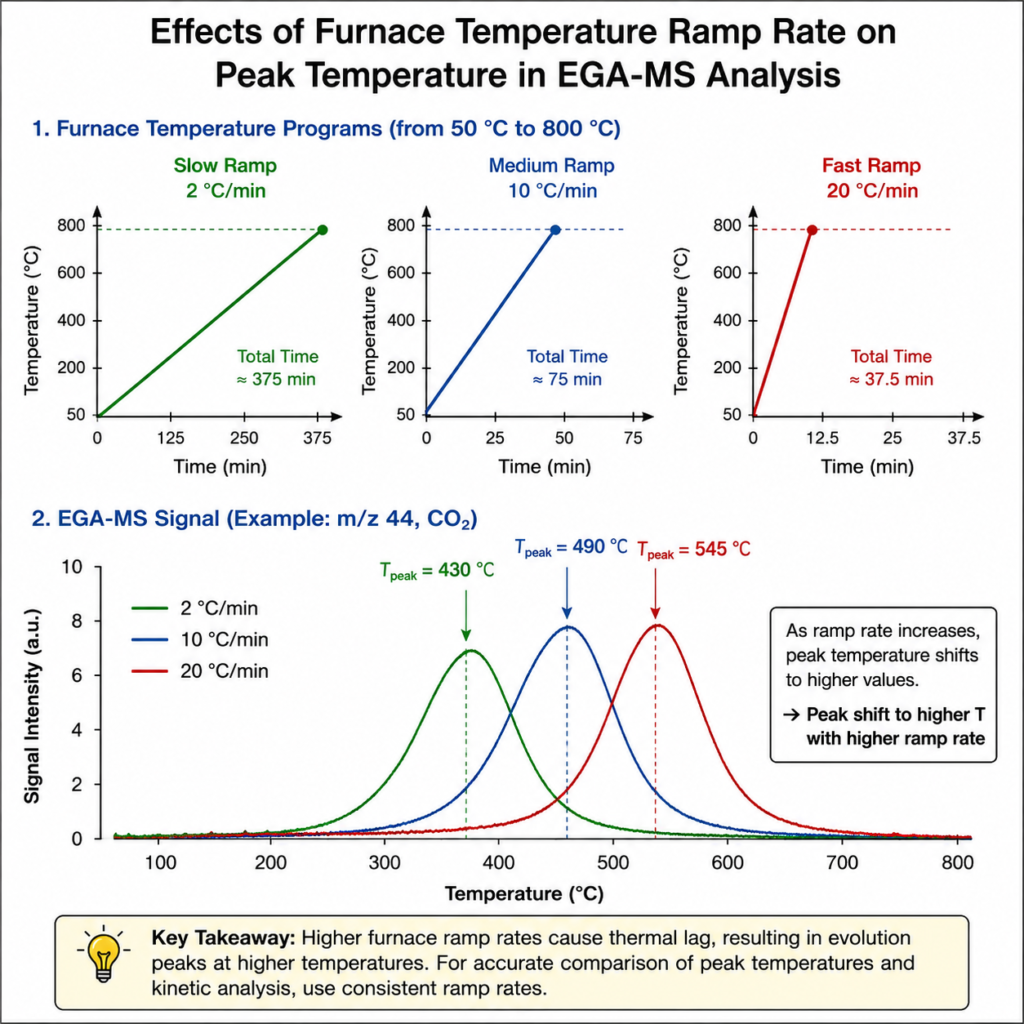
During thermal analysis, a sample is heated under controlled conditions. Different sample components evolve or decompose at different temperatures.
The heart-cut technique allows the analyst to select the temperature region containing the target compound or its thermal decomposition product.
The sample portions are handled selectively:
The portion eluting before the target compounds is vented.
The portion containing the target compounds is transferred to the separation column.
The portion eluting after the target compounds remains in the sample cup.
This selective transfer reduces the amount of interfering material reaching the GC column.
Why does this matter?
Instead of transferring the entire complex sample to the GC/MS system, the method focuses on the temperature region relevant to the target analyte. This can improve the visibility of the target peak and reduce interference from the bulk matrix.
Case Study: Analysis of DESS in HyGold 100 Mineral Oil
The reported application investigated sodium di(2-ethylhexyl)sulfosuccinate (DESS), a surface active agent, in HyGold 100 mineral oil.
The mineral oil sample contained approximately 500 ppm of DESS.
The objective was to evaluate whether the target compound could be identified and quantified despite interference from the hydrocarbons present in the mineral oil.
1. Understanding the thermal behaviour of the sample
EGA thermograms were obtained for HyGold 100 and DESS.
The bulk hydrocarbons making up HyGold 100 evolved mainly between approximately 100°C and 180°C.
DESS showed a different thermal behaviour. It decomposed between approximately 180°C and 270°C, producing di(2-ethylhexyl) fumarate (DEF).
This difference in thermal behaviour provided an opportunity to selectively transfer the temperature fraction associated with the target compound.
2. Formation of di(2-ethylhexyl) fumarate (DEF)
During thermal decomposition, DESS undergoes a reaction in which sodium sulfite (Na₂SO₃) is eliminated, forming di(2-ethylhexyl) fumarate (DEF).
<escape>DESS → DEF + Na₂SO₃</escape>
The DEF formed during thermal desorption was used as the target compound for quantitative analysis.
Monitoring DEF provides an indirect way to determine the amount of DESS in the sample.
3. Why conventional thermal desorption GC/MS was challenging
When HyGold 100 containing approximately 500 ppm of DESS was analysed without heart-cutting, the DEF peak was not clearly identifiable in the total ion chromatogram.
The target signal overlapped with hydrocarbon signals originating from the mineral oil.
Although the DEF-related signal was present, the interference made its identification difficult using the TIC alone.
This illustrates an important analytical issue: the presence of a target-related signal does not necessarily mean that the compound can be clearly identified in a complex chromatogram.
How Heart-cutting Improved DEF Detection
To reduce the interference, the heart-cut EGA-GC/MS technique was applied.
The temperature region associated with DEF formation was selected for transfer to the GC separation column.
The sample fraction containing the target compound was transferred, while the earlier-eluting portion was vented and the later portion remained in the sample cup.
This reduced the amount of interfering hydrocarbon material entering the GC/MS system.
Without heart-cutting
The sample was analysed without selective temperature-based transfer.
Hydrocarbon components from HyGold 100 interfered with the DEF signal.
The DEF peak was difficult to identify in the TIC.
The reported signal-to-noise ratio was 11.
With heart-cutting
The selected temperature fraction containing the target compound was transferred.
A large portion of the interfering mineral oil components was excluded.
The DEF peak became clearly observable.
The reported signal-to-noise ratio increased to 120.
<escape>Signal-to-noise improvement: 11 → 120</escape>
This represents approximately a 10.9-fold increase in the reported signal-to-noise ratio.
The result demonstrates how selective thermal transfer can improve the detection of a target compound in a complex mineral oil matrix.
Quantitative Analysis and Reproducibility
The DEF peak formed during thermal desorption was used for the quantitative determination of DESS in HyGold 100.
The comparison between analysis with and without heart-cutting showed that the technique significantly improved the visibility of the target signal.
The reported reproducibility was:
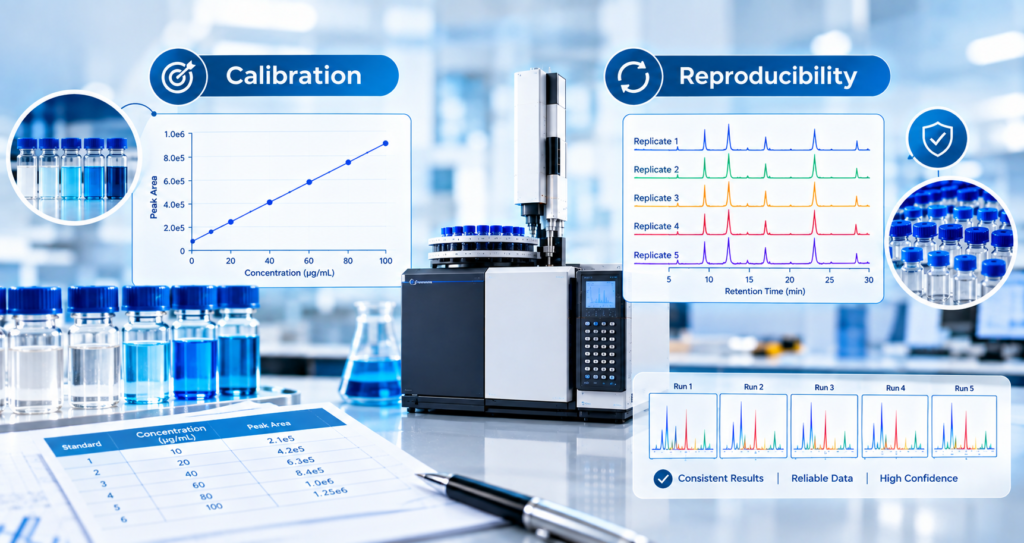
RSD = 4.7% (n = 5)
This result was within the project’s data quality objectives (DQO).
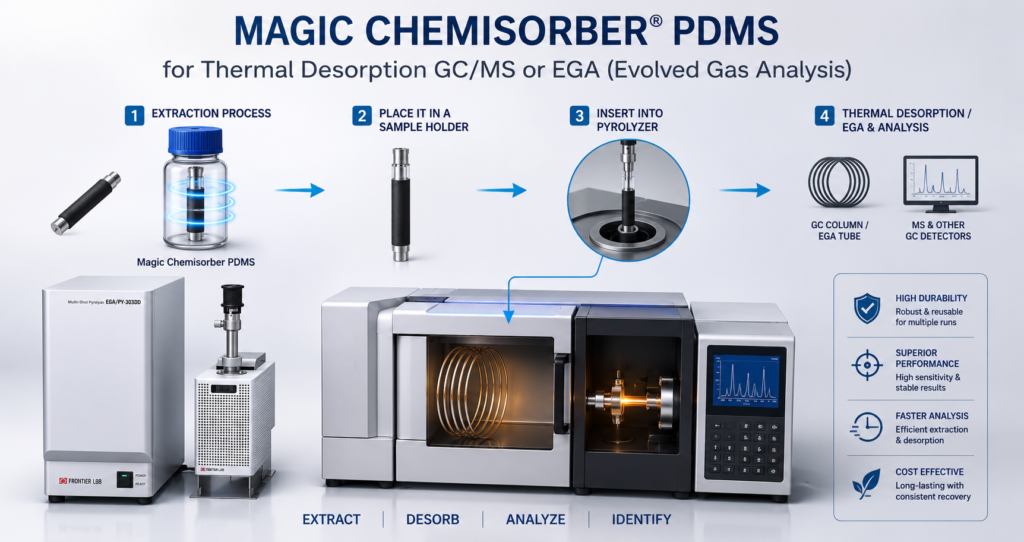
The study also reported that the heart-cutting technique could be easily automated using the Multi-Shot Pyrolyzer with an Auto-Shot sampler.
Important distinction: The reported application used a HyGold 100 sample containing approximately 500 ppm DESS. The source reports the analytical signal improvement and reproducibility, but does not state a separately measured final DESS concentration. The 500 ppm value should therefore be described as the sample concentration, not as an independently reported measured result.
Experimental Conditions and Instrumentation
The following table summarizes the reported analytical setup.
| Parameter | Experimental condition |
|---|---|
| Sample matrix | HyGold 100 mineral oil |
| Mineral oil source | Ergon Refining, USA |
| Target surface active agent | DESS |
| DESS concentration in sample | Approximately 500 ppm |
| Target decomposition product | Di(2-ethylhexyl) fumarate (DEF) |
| EGA temperature range | 100–300°C |
| Heating rate | 10°C/min |
| DESS decomposition temperature | Approximately 180–270°C |
| HyGold 100 hydrocarbon evolution | Approximately 100–180°C |
| GC oven temperature | 40–320°C |
| GC oven heating rate | 20°C/min |
| GC final hold | 4 min |
| Separation column | Ultra ALLOY+-5 |
| Column length | 30 m |
| Column internal diameter | 0.25 mm |
| Film thickness | 0.25 µm |
| Column flow rate | 1 mL/min |
| Carrier gas | Helium |
| Split ratio | 1/20 |
| Sample weight | Approximately 100 µg |
| Reproducibility | 4.7% RSD (n=5) |
Products used:
Multi-functional Pyrolyzer
Selective Sampler
Vent-free GC/MS adapter
Ultra ALLOY-5 capillary column
Key Benefits of Heart-cut EGA-GC/MS for Mineral Oil Analysis
The reported application highlights several useful analytical capabilities.
1. Selective transfer of target compounds
The technique allows a chosen temperature fraction containing the target compound to be transferred to the GC separation column.
2. Reduced hydrocarbon interference
By venting the sample portion that elutes before the target and retaining the later portion in the sample cup, the method reduces unwanted matrix components reaching the GC/MS system.
3. Improved signal-to-noise ratio
The reported signal-to-noise ratio increased from 11 without heart-cutting to 120 with heart-cutting.
4. Analysis of additives in complex oil matrices
The application demonstrates the analysis of DESS in HyGold 100 mineral oil, where the target-derived DEF signal was difficult to identify without selective transfer.
5. Reproducible analysis
The reported analysis achieved 4.7% RSD across five measurements, within the project’s data quality objectives.
6. Automation capability
The heart-cutting technique can be automated using the Multi-Shot Pyrolyzer with an Auto-Shot sampler, supporting repeatable analytical workflows.
Broader Applications in Fats, Oils and Additive Analysis
The ability to selectively transfer target compounds from complex samples is relevant to several analytical areas.
Potential areas of interest include:
Mineral oil analysis: Investigation of additives and other components in complex hydrocarbon mixtures.
Lubricant analysis: Characterization of additives used to modify lubricant properties.
Cosmetics raw materials: Analysis of components used in oil-based cosmetic formulations.
Surface active agent analysis: Investigation of surfactants and their thermal decomposition products.
Fats and oils research: Analytical investigation of complex oil-based materials.
Quality control: Improving the visibility of target compounds in samples containing large amounts of matrix components.
Explore related analytical capabilities from Frontier Lab SEA:
Applied Pyrolysis Research – Explore thermal analysis and pyrolysis-based analytical applications.
Products – Discover Frontier Laboratories’ analytical instrumentation and accessories.
Contact Frontier Lab SEA – Discuss analytical requirements and application-specific solutions.
Conclusion: Can Selective Thermal Transfer Make a Hidden Signal Visible?
Analysing surface active agents in mineral oil can be difficult because the target-derived signal may overlap with the large number of hydrocarbon components present in the sample.
The Heart-cut EGA-GC/MS approach demonstrates how selecting a temperature fraction can reduce matrix interference before GC/MS analysis.
In the reported DESS application, thermal decomposition produced DEF, which was used as the target compound for quantitative analysis. Heart-cutting improved the signal-to-noise ratio from 11 to 120, and the method achieved 4.7% RSD across five measurements.
This approach demonstrates the value of combining thermal separation and selective sample transfer when analysing additives in complex oil matrices.
Interested in improving the analysis of additives in complex samples? Explore Frontier Lab SEA’s analytical products and application solutions.
Frequently Asked Questions (FAQs)
Mineral oil contains a complex mixture of hydrocarbons. These components can interfere with the chromatographic signals of surface active agents or their thermal decomposition products, making identification and quantification difficult.
Heart-cut EGA-GC/MS is a technique that selectively transfers a chosen temperature fraction of a sample to the GC separation column. This helps reduce interference from unwanted sample components.
DESS refers to sodium di(2-ethylhexyl)sulfosuccinate, the surface active agent investigated in the mineral oil sample.
DEF is di(2-ethylhexyl) fumarate. It is formed when DESS decomposes during thermal desorption through the elimination of sodium sulfite. The DEF peak is used for the quantitative analysis of DESS.
The DEF peak overlapped with hydrocarbon signals from HyGold 100 mineral oil. This interference made the target peak difficult to identify in the total ion chromatogram.
The reported signal-to-noise ratio increased from 11 without heart-cutting to 120 with heart-cutting, representing approximately a 10.9-fold improvement.
The reported reproducibility was 4.7% RSD across five measurements (n=5), which was within the project’s data quality objectives.
The reported EGA temperature range was 100–300°C, with a heating rate of 10°C/min.
The reported setup included a Multi-functional Pyrolyzer, Selective Sampler, Vent-free GC/MS adapter and Ultra ALLOY-5 separation column.
Yes. The study reports that the heart-cutting technique can be easily automated using the Multi-Shot Pyrolyzer with an Auto-Shot sampler.