Safe Food Packaging Starts Here: Detecting NIAS Using Py-GC/MS Technology
Introduction
The global shift toward a circular economy has redefined how industries approach plastic waste. Materials once considered disposable are now being recycled and reused—especially in food packaging. While this transition supports sustainability goals, it introduces a less visible but critical concern: Non-Intentionally Added Substances (NIAS).
As manufacturers aim for higher recycled content in plastics like PET and HDPE, ensuring chemical safety becomes increasingly complex. Unlike visible defects, NIAS exist at trace levels yet can significantly impact food safety, odor, and regulatory compliance.
To tackle this hidden challenge, scientists rely on Pyrolysis-Gas Chromatography–Mass Spectrometry (Py-GC/MS)—an advanced analytical technique that reveals what conventional testing often misses.
What Are NIAS in Food Packaging?
In food contact materials (FCM), substances are broadly divided into:
Intentionally Added Substances (IAS):
Additives like plasticizers, antioxidants, and stabilizers that serve a known purpose.Non-Intentionally Added Substances (NIAS):
Unintended chemicals present in the final product.
Sources of NIAS
NIAS can originate from multiple pathways:
1. Degradation Products
During recycling, plastics are exposed to heat and mechanical stress. This can break down polymers and additives, forming new chemical compounds.
2. Manufacturing Impurities
Residual chemicals from the original polymer production may remain trapped within the material.
3. Contaminants from Previous Use
Recycled plastics may carry absorbed substances such as:
Detergents
Fragrances
Pesticides
Oils and solvents
These substances can migrate into food, affecting taste, odor, and safety.
Limitations of Traditional Testing Methods
Historically, laboratories have used solvent extraction methods to identify contaminants. While useful, these approaches have major drawbacks:
Key Challenges
Selective Solubility: Only certain compounds dissolve, leaving others undetected.
Time-Consuming: Testing can take 24–48 hours per sample.
High Solvent Usage: Increases environmental and operational costs.
Limited Detection Range: Heavier oligomers and complex NIAS often go unnoticed.
These limitations create blind spots in safety assessment—especially for recycled plastics.
How Py-GC/MS Transforms NIAS Detection
Pyrolysis-GC/MS (Py-GC/MS) offers a more direct and comprehensive solution.
Instead of extracting compounds using solvents, this technique uses controlled heat to break down the sample and analyze it in real time.
Why It Works Better
Direct analysis of solid plastic
Minimal sample preparation
Detection of both volatile and non-volatile compounds
Ability to identify complex degradation products
The Micro-Furnace Advantage
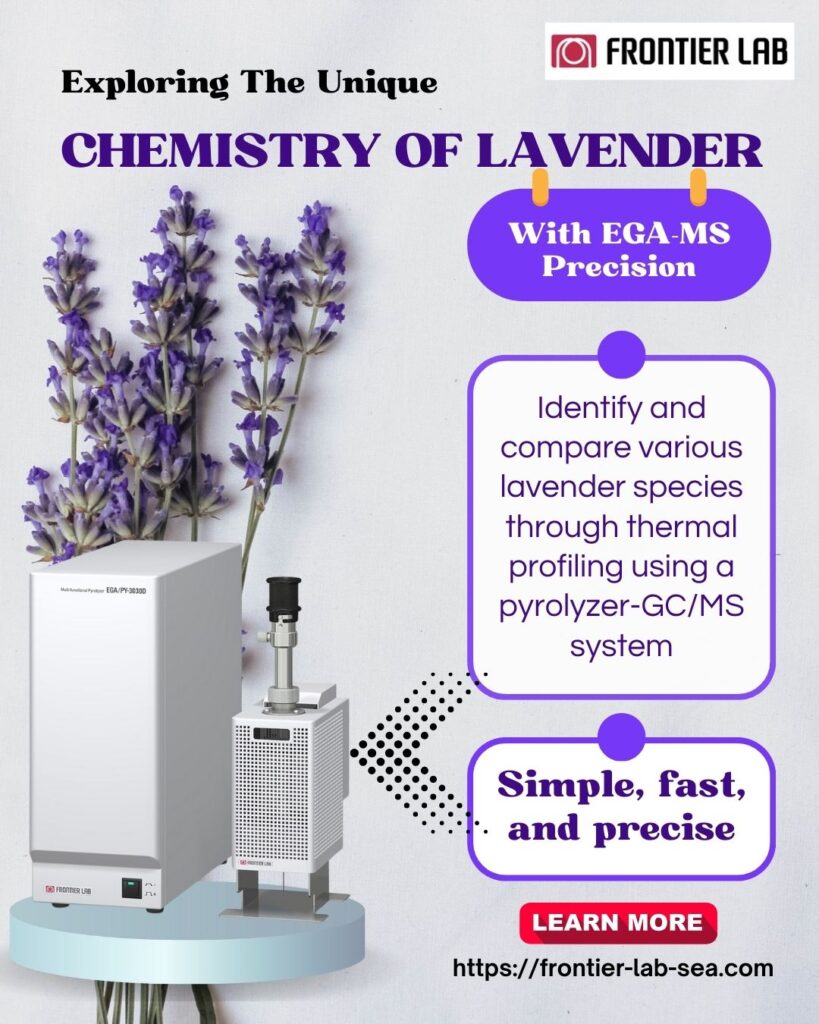
Advanced systems like the Frontier Lab EGA/PY-3030D use a vertical micro-furnace that:
Instantly heats the sample
Ensures consistent results
Improves reproducibility for regulatory validation
Step-by-Step NIAS Identification Workflow
Accurate NIAS analysis requires a multi-stage approach:
Step 1: Evolved Gas Analysis (EGA)
EGA creates a thermal profile of the material by gradually heating it.
Low temperatures: Release volatile compounds (e.g., solvents, fragrances)
Mid-range temperatures: Release additives (plasticizers, stabilizers)
High temperatures: Break down the polymer backbone
This generates an EGA thermogram, guiding further analysis.
Step 2: Heart-Cutting Technique
Once the NIAS zone is identified:
Only specific temperature fractions are analyzed
Polymer interference is minimized
Trace contaminants can be detected at ppb levels
This targeted approach ensures precision and clarity.
Step 3: Advanced Identification with F-Search
Identifying unknown compounds requires specialized databases.
F-Search software provides:
Additive libraries (300+ compounds)
Polymer-specific profiles
Oligomer identification tools
This significantly improves accuracy compared to standard libraries.
Case Study: Eliminating Odors in Recycled PET
A common issue in recycled PET (rPET) bottles is a musty or plastic-like odor.
The Challenge:
Traditional testing methods failed to detect the cause.
The Solution:
Using Py-GC/MS with thermal desorption, researchers identified:
2-methylisoborneol
Branched aldehydes
These NIAS formed due to detergent degradation during recycling.
The Outcome:
Manufacturers optimized:
Washing processes
Processing temperatures
Result:
Eliminated odor issues
Prevented product rejection
Saved significant costs
Regulatory Compliance and Industry Impact
With stricter global regulations such as:
EU Regulation 10/2011
FDA Food Contact Notifications
Manufacturers must now:
Conduct detailed NIAS risk assessments
Ensure migration limits are not exceeded
Maintain chemical traceability
Why Py-GC/MS Matters
Provides a complete chemical fingerprint
Supports compliance documentation
Enhances consumer safety
It has evolved from a research tool into a regulatory necessity.
The Future of Safe, Sustainable Packaging
The push toward recycled plastics is essential for environmental sustainability. However, safety cannot be compromised.
Understanding and controlling NIAS is key to:
Maintaining product quality
Meeting regulatory standards
Building consumer trust